
Homeowners: Safely Clean Pizza Oven Stones With Dry Ice Option
Homeowners: Safely Clean Pizza Oven Stones With Dry Ice Option
The safest way to clean a pizza oven stone is to let it cool completely, dry-scrape off loose debris, and then use heat, a burn-off, or a localized baking soda paste for stubborn spots. Soap and soaking are off the table because the stone is porous and will hold onto detergent long after it dries. Sudden temperature swings are just as risky, so patience matters as much as technique. The exact method also depends on what the stone is made of, which the next sections cover.
TL;DR:
- Avoid using soap and soaking your pizza stone, as porosity causes detergents to linger and risk imparting a soapy taste.
- Let the stone cool completely before cleaning, and never scrape or expose it to water while still warm to prevent cracking from thermal shock.
- Conduct high-heat burn-offs in a cold oven to carbonize residue, and use a baking soda paste for stubborn stains, ensuring thorough drying afterward.
- Ceramic and cordierite stones are highly porous and require minimal water, while glazed stones tolerate brief warm rinses, and steel or cast iron stones should be wiped and oiled.
- For heavily grease- or odor-saturated stones, dry-ice cleaning is a chemical-free method suitable for outdoor ovens and prolonged heavy use.
Table of Contents
- Cleaning your stone step by step, from first wipe to deep clean
- How cleaning changes depending on your stone’s material
- The tools and supplies that actually belong in your cleaning kit
- Fixing the most common pizza stone problems
- Simple habits that keep your stone clean longer
- When dry scraping and burn-offs aren’t enough
- Where this guidance comes from
- The one habit that matters more than any product
- A chemical-free option for grease that won’t quit
- Sources
- FAQ
Cleaning your stone step by step, from first wipe to deep clean
Most pizza stone damage happens because someone rushes the cooling step or reaches for a sponge and dish soap out of habit. A slower, drier process protects the stone and keeps your next pizza from tasting like cleaning product.
- Let the stone cool completely inside the oven, ideally for several hours or overnight for thick stones, since thermal shock is the leading cause of stone cracking when a hot surface meets cold air or water.
- Once cool, scrape off loose crumbs and food bits with a plastic bench scraper, working at a low angle so you lift debris without gouging the surface.
- Follow up with a stiff nylon brush to clear crumbs from any grooves or textured areas.
- For stuck-on food, run the oven empty at high heat for 30 to 60 minutes. This burn-off method carbonizes residue into ash that brushes away easily once the stone cools again.
- Let the stone cool fully after the burn, then scrape and brush off the ash left behind.
- For greasy or protein-based stains that survive the burn, mix baking soda with a small amount of water into a paste, spread it over the spot, let it sit, then scrub gently with a damp cloth and air-dry thoroughly before the stone goes back in the oven.
- Inspect the surface. It should be free of raised, crusty patches. Color variation is normal and not something to scrub away.
Pro Tip: Do the burn-off in a cold oven that heats up gradually rather than starting from a preheated oven. Easing into high heat reduces the risk of thermal shock on a stone that still has any residual moisture.
Skipping steps is where most people get into trouble. A stone that is scraped while still warm, or hit with a splash of water to “help things along,” is far more likely to crack than one that is simply left alone to cool.
How cleaning changes depending on your stone’s material
Not every pizza stone behaves the same way, and treating a delicate ceramic slab like a cast-iron pan is how people end up with a ruined stone or a cracked one.
- Ceramic and cordierite stones are highly porous, so they should get minimal water, no soap, and rely almost entirely on dry scraping and burn-offs to stay clean.
- Glazed stones have a sealed surface, which makes a short warm rinse acceptable, but detergents and metal scrapers still need to stay off the glaze to avoid chips.
- Baking steel behaves more like cookware than stone. Wipe it down, dry it immediately to prevent rust, and re-season with a thin layer of oil when the surface looks dull.
- Cast-iron pizza stones follow the same logic: wipe, dry fully, and apply a light coat of oil. Never let a cast-iron stone sit wet or soak in a sink.
- Identifying your material usually comes down to weight and texture. Cordierite and ceramic stones are heavy, matte, and visibly porous. Glazed stones have a smooth, shiny finish. Steel and cast iron are noticeably heavier still and feel metallic rather than stone-like. Manufacturer documentation, when available, is the most reliable way to confirm which type you own.
Mixing up these categories is an easy mistake. Someone who rinses a cordierite stone the way they would a glazed one may notice water sitting on the surface rather than running off, which is a sign the stone is absorbing far more than it should.
The tools and supplies that actually belong in your cleaning kit
A handful of inexpensive tools handle nearly every cleaning situation a pizza stone throws at you, and most of them are things you may already own.
- A stiff nylon brush or a long-handled oven brush for clearing crumbs and ash without scratching the surface.
- A plastic bench scraper for lifting stuck food before it has a chance to carbonize further.
- Heat-resistant gloves for handling a stone that has not fully cooled or for reaching into a hot oven during a burn-off.
- Baking soda for spot treatments on organic residue, and coarse salt as a gentle abrasive for light surface grime.
- High-temperature parchment paper, used proactively under dough to catch drips before they bake onto the stone.
Ventilation matters during a burn-off since carbonizing grease produces smoke, so crack a window or run a range hood if you’re cleaning indoors. Avoid breathing in heavy smoke directly.
What to leave in the cabinet: dishwashers, dish soap, and metal scouring pads. All three either force water and detergent deep into a porous surface or scratch away the protective texture that keeps dough from sticking.
Fixing the most common pizza stone problems
Most stone complaints fall into one of a few categories, and the fix depends on whether the issue is cosmetic or something that actually affects performance.
- Dark patina versus raised carbon: flat discoloration is normal and not worth scrubbing, since experts consider dark spots a natural patina rather than a flaw, while raised, crusty deposits should come off with a burn-off followed by scraping.
- A greasy stone that smokes when heated: run an extended burn-off until the smoking stops, which signals the trapped oil has fully carbonized, and repeat the cycle if smoke returns on the next use.
- Soap used by accident: rinse briefly, dry the stone completely, then run an empty high-heat bake, since a hot, dry cycle can help vaporize lingering soap residue once the stone has been rinsed and dried first.
- Cracks and chips: hairline surface cracks are often cosmetic, but a crack that runs through the stone or causes pieces to shift is a safety issue and means it’s time to replace the stone.
- Stubborn raised spots that survive multiple burn-offs can be sanded or buffed very lightly as a last resort, working gently so you don’t thin the surface unevenly.
Pro Tip: Before reaching for sandpaper, try one more full burn-off cycle. Many “permanent” stains are just residue that needs another round of heat to fully carbonize.
Simple habits that keep your stone clean longer
A pizza stone that gets a quick once-over after every use rarely needs an aggressive deep clean.
- Brush off crumbs once the stone has cooled after each use. This single habit prevents most buildup before it hardens.
- Save the full burn-off and baking soda treatment for when the stone actually needs it, not on a fixed weekly or monthly schedule.
- Decide whether to leave the stone in the oven or store it separately. Leaving it in place saves effort but exposes it to spills and other cookware; storing it elsewhere protects the surface but adds a step before every use.
- Keep stored stones dry and avoid stacking heavy pans or cookware on top, which can chip edges or crack a stone that’s resting unevenly.
None of this requires special products. It’s mostly about not letting food sit on the surface long enough to bake into something that needs a burn-off to remove.
When dry scraping and burn-offs aren’t enough
Most pizza stones respond well to the routine above, but some situations go past what a home burn-off can reasonably fix. A stone that has absorbed grease over years of heavy use, an outdoor oven stone that’s picked up a persistent smoky or rancid smell, or a large stone that would need hours of repeated high-heat cycles to clear are all cases where DIY methods hit their limit.
This is where a chemical-free option like dry-ice cleaning becomes worth considering. The process uses dry ice rather than water or detergent, which means it avoids the soaking and scrubbing that porous stone can’t tolerate, and it skips the chemical residue that soap leaves behind.
- Grease that’s worked its way deep into a porous stone over months or years, not just a single bad bake.
- Odors that persist even after multiple burn-off cycles.
- Large outdoor pizza ovens where a full burn-off is impractical or where the stone is hard to access.
RestoraPlus offers this kind of chemical-free, low-water cleaning for outdoor cooking equipment, including pizza ovens, as part of its outdoor cooking and kitchen cleaning services. Quotes are handled through photos submitted online, which makes it straightforward to find out whether a stone is a good candidate before committing to a service visit. It’s a trade-off worth weighing against the time and fuel cost of running several more burn-off cycles yourself.
Where this guidance comes from
The core burn-off and no-soap guidance in this piece comes from Ooni’s pizza stone cleaning guide, which lays out why porous stone and detergent don’t mix and how long a burn-off cycle typically runs. Food Network’s cleaning guide backs up the idea that patina and discoloration are normal rather than something to scrub out. Real Simple’s guide to cleaning without soap covers the baking soda paste method and what to do if soap gets used by mistake. Additional notes on thermal shock and natural patina came from wikiHow and Ooni’s help center.
The one habit that matters more than any product
The biggest mistake people make with a pizza stone isn’t using the wrong cleaning product, it’s rushing the cooling step. Nearly every cracked stone story traces back to cold water, a damp cloth, or a scraper hitting a surface that was still hot. Patience, not a special tool, is what actually protects the stone.

The second mistake is treating discoloration as a problem to solve. A stone covered in dark patina but free of raised, crusty food is a clean stone. Chasing a brand-new look with aggressive scrubbing or sanding does more harm than the stains ever would.
If you take one thing from this guide, let it be this: scrape and burn before you ever reach for water, and accept that a well-used stone is supposed to look used.
— Cameron
A chemical-free option for grease that won’t quit
If your pizza stone or outdoor oven has reached the point where burn-offs aren’t cutting it anymore, there are cleaning methods that skip soap and heavy scrubbing altogether. Dry-ice cleaning handles grease-saturated and odor-tainted cooking equipment without soaking the stone or leaving chemical residue behind, which matters for porous surfaces.
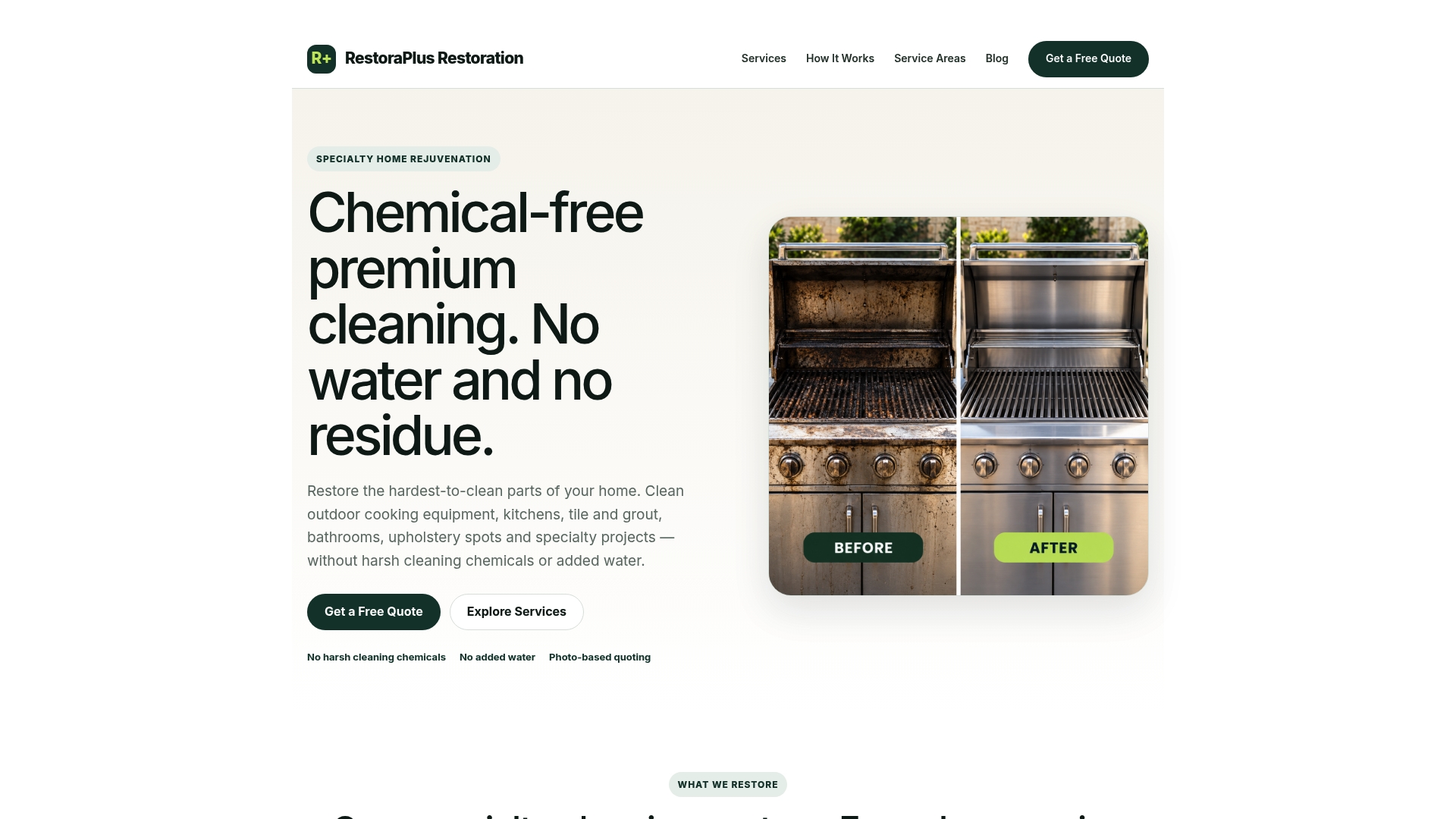
This fits homeowners dealing with an outdoor pizza oven that’s seen years of heavy use, or anyone who would rather hand off a stubborn cleaning job than spend an afternoon running repeated burn-off cycles. Quotes for such services are often provided based on photos submitted by clients, to give a sense of cost and scope before scheduling. Check out the Outdoor Cooking & Living services to see if your stone is a good fit.
Sources
- How to Clean a Pizza Stone | Complete Guide | Ooni
- How to clean a pizza stone | Food Network
- How to Clean a Pizza Stone Without Soap | Real Simple
FAQ
Can you use Dawn dish soap on a pizza stone?
No. Soap and detergent soak into the porous surface of most pizza stones and can leach into future bakes, leaving a soapy taste behind. If soap has already been used, rinse briefly, dry the stone fully, and run an empty high-heat bake to help clear the residue.
Why has my pizza stone gone black?
Dark discoloration is a normal patina that builds up from repeated use and is not a sign of damage. Experts recommend leaving this natural darkening alone and focusing cleaning efforts only on raised, crusty food deposits.
Is it okay to wash a pizza stone with soap and water?
It’s not recommended for unglazed stones, since the porous material holds onto detergent long after rinsing. The safer approach is dry scraping and a high-heat burn-off, with water reserved only for a light baking soda paste treatment on stubborn spots.
How do I remove grease from my pizza stone?
Run the oven empty at high heat until the stone stops smoking, which signals the trapped grease has fully carbonized, then let it cool and brush away the ash. For greasy spots that remain, a baking soda paste applied to the cooled stone can lift the residue without soap or heavy moisture.
